
Farmington Previous Residents by Era
Different sources answer different parts of an address history. The clearest Farmington route begins with the San Juan County assessment account and then moves to parcel context, recorded documents, city or county permits, historical maps, repositories, and newspapers. The table distinguishes verified access from unknown coverage. It does not claim a complete prior-owner chain, a complete list of past households, or a published local directory run.
| Source | Period confirmed | Where held | What it can show |
|---|---|---|---|
| San Juan County EagleWeb account | Public account details, with historical fields where displayed | County public property system | Account, parcel, situs, legal, tax-area, and assessment context |
| County Clerk grantor/grantee route | Online coverage date not published | San Juan County Clerk, Aztec | Index discovery and document-copy identifiers |
| City Building Permit Reports | Monthly reports from January 2021 forward | Farmington archive and Building Inspection | A dated permit-report lead, not a final file |
| Farmington Sanborn map | November 1908, one sheet | Library of Congress | Dated mapped streets, blocks, uses, and footprints in coverage |
| Directories and federal census | Exact local directory holdings not verified | Repositories and federal census sources | Potential dated household leads, subject to source limits |
Start with the most recent administrative identifier and work backward. A map or directory can then test a period question, while a recorded instrument supplies the evidence needed for a transfer question. Treat each date as a checkpoint, not as proof that every interval has been filled.
Farmington Previous Residents Start With Parcels
The verified discovery tool is the San Juan County EagleWeb public entry. Its structured situs search can use house number, direction, street name, designation, unit, and City or ZIP. The official help says City or ZIP narrows an address search, while omitting it returns all matching address records. A successful account can supply the account number, parcel number, situs address, owner and mailing labels, tax area, legal summary, assessment fields, and links that may include assessment history, tax history, and Parcel Map.
These labels are administrative property information. They do not establish present occupancy, title, household membership, or a complete ownership history. The County also says assessment values are for assessment purposes and do not necessarily represent market value. Preserve the account and parcel numbers before leaving the card. The EagleWeb account's Parcel Map link is the verified handoff to the County Parcel Viewer, though this research did not capture a stable inventory of the viewer's live tools or layers.
For a Farmington mailing locality, check city versus unincorporated county jurisdiction before pursuing permits or address records. San Juan County Rural Addressing handles physical addressing in unincorporated county territory, not every address with a Farmington mailing line.
San Juan County Deed Chain Backward
The San Juan County Clerk Recording Department describes an online grantor/grantee index route. The captured county page does not state a coverage start date, display the live field list, establish image availability, or prove a full title chain. Use the index to discover document clues, then request the actual document when needed. The Clerk asks for a book and page or document number for copies and says staff will not perform detailed real-estate searches. That makes the parcel and legal description important before an inquiry.
- Find the EagleWeb account for the address and record the account number, parcel number, situs label, legal summary, tax area, and source date.
- Open the account's Parcel Map link for spatial context, then retain the parcel number and legal description. Do not treat the map as a survey or title opinion.
- Use the Clerk's official recording route to search the presently identified owner or entity as an index lead. Keep the search date and exact name form.
- For each matching instrument, capture the grantor, grantee, recording date, instrument type, document number or book and page if shown, and legal-description match.
- Use the seller or grantor on the known transfer as a lead to the earlier acquisition, testing the same legal description at each step rather than trusting a street match alone.
- Request a copy with the document number or book and page when the index result needs verification. Keep the recorded document separate from assessment information.
- Grantor and grantee
- The grantor is the party transferring an interest named in an instrument; the grantee is the party receiving it.
- Chain of title
- A sequence of recorded instruments traced through the same legal description. It is not a legal title opinion.
- Legal description
- The parcel description used in recorded land documents. It is more stable than a street address when comparing older records.
Note: A recorded deed, an assessor owner label, and a map label have different dates and purposes, so cite all three separately.
Farmington Previous Residents in Directories
Past households require a separate layer from a deed chain. Farmington research confirms a Polk title through WorldCat, but not issue years, a local holding, or the type of sections in any surviving volume. The Farmington city directory collections are therefore a repository question first. If an exact issue is found, copy the title, publisher, issue date, page, heading, and section type. An address line may be a residence, mailing, business, or street listing, depending on the volume.
The Farmington Public Library catalog is the local catalog route for that confirmation.
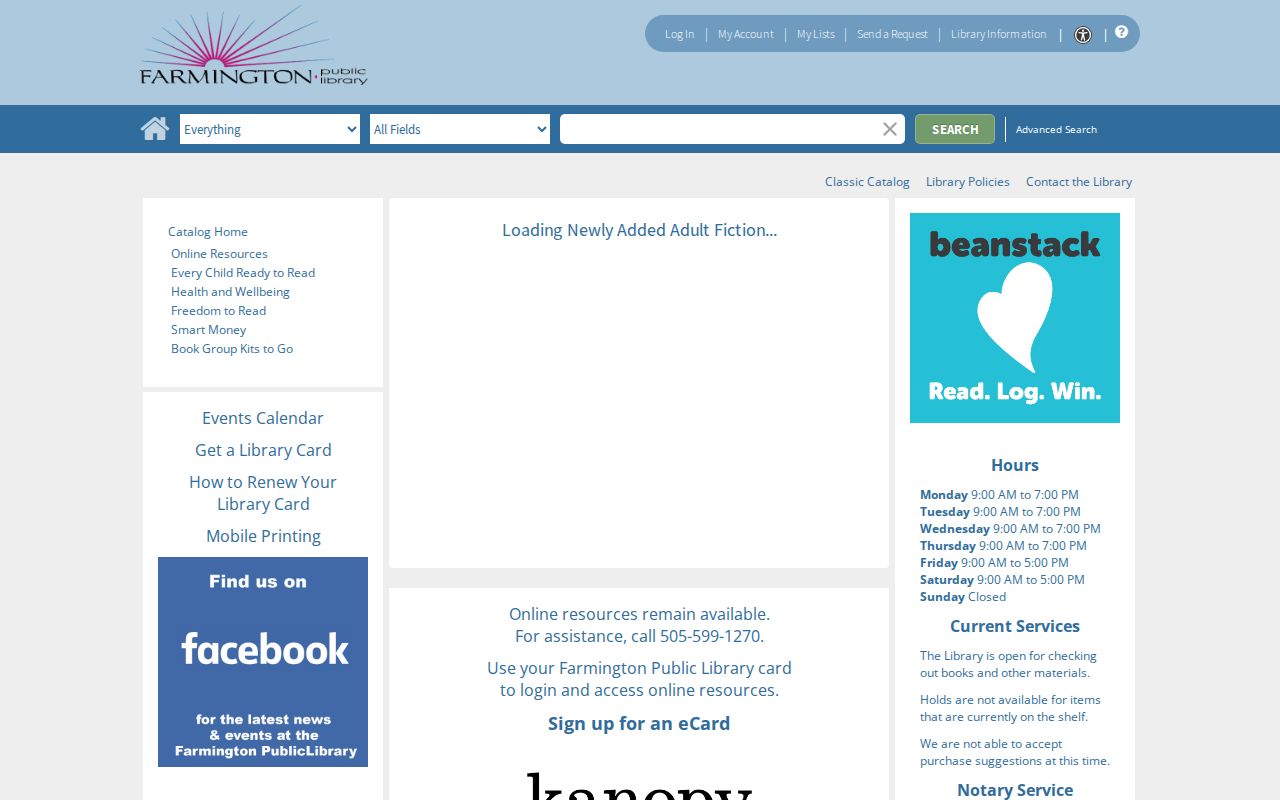
The catalog screen supports a title search, but it does not itself document a house-history service, local directory shelf, reverse-directory run, microfilm list, or local-history inventory.
The WorldCat Polk's Farmington record supplies the verified title and publisher clue.
Ask a repository for the exact issue date, places covered, and alphabetical, business, street, or reverse arrangement. Do not use the displayed catalog date as an issue year or infer that a person or address appears.
Farmington Previous Residents and Census
A directory line and a census schedule are complementary, not interchangeable. Federal census schedules are time-lagged household sources rather than current-address records. Preserve the census year, enumeration district, page or image, household line, transcription or repository, and its exact place wording. Preserve the directory's separate citation. This avoids turning a plausible name match into a claim that a person lived at a Farmington address on a specific day.
- Choose a dated lead, such as a confirmed directory volume, map date, recorded transfer, permit report, or census year.
- Check whether the street name and place wording fit the period. Keep old spellings and do not silently convert them to modern forms.
- Record the directory or census citation in full, including its section, page or image, and the household or entry wording.
- Compare the lead with a parcel legal description, recorded instrument, historic map, or newspaper item that has its own date and source label.
- Mark a conflict or missing period as unresolved. A gap is more accurate than a seamless but unsupported address story.
A census result can help frame a household at its recorded time. It does not establish title, a continuing residence, or the precise relationship of everyone who may share a surname.
Farmington Previous Residents and Permits
Structure clues should be labeled by their source. The City Building Permit Reports archive has monthly reports from January 2021 forward, including 2026 material. It is a date-based discovery source. Farmington says construction permits are not issued online and are handled by Building Inspection, so an archive entry does not replace the underlying permit, plan, inspection, or final record. Request a specific file from the right custodian when an address and date window are known.
Inside city limits, Building Inspection handles city permits in person. Unincorporated county property may instead involve San Juan County Community Development and its SmartGov route. A permit can describe a stated action at a time. It does not prove construction completion, an ownership transfer, or who lived at the location.
The assessment card may also contain improvement-related fields and historical assessment information. Describe a construction date as an assessment field, permit-report item, recorded document, Sanborn observation, or historic-plan context according to the source that actually supplies it.
Farmington's 1908 Address Snapshot
The historical source for an older place is the Library of Congress Farmington Sanborn fire-insurance map, dated November 1908. It is one sheet. Within its covered area, it can show building footprints, named streets, uses, blocks, and water or fire features. Compare it only after recording the map scale, street labels, block, and date. It is a dated observation of the built environment, not proof of a present parcel boundary, a construction date, or a structure still standing.
No additional Library of Congress Farmington Sanborn issue was confirmed by the cited source review. Pair the sheet with a recorded deed, permit record, historic-resource source, or repository item before making a claim about a particular building. Modern city and county maps are also administrative mapping tools, not legal surveys or title determinations.
Historic address matching is fragile in Farmington. The City's 2019 historic-resources plan describes the 1879 Pierce plat around East Main Street and notes that some cross streets do not meet because the grid jogs around early family-property patterns. That is a useful warning when a map, newspaper, directory, or deed seems to place a name near an unexpected intersection. Check the block, lot, subdivision, legal description, map sheet, and date before connecting two address forms.
The plan documents a physical-pattern issue. It does not verify a citywide renumbering, a street-name conversion, or an old-to-new address table. No official citywide renumbering or street-name-change index was located. For a specific discrepancy, request maps, plats, ordinances, directories, or agency records using both known street terms and a date range.
Farmington Previous Residents at Repositories
The San Juan County Historical Society says it was formed in 1989 to preserve historical documents and a computerized database. It lists 201 North Main Avenue in Aztec and 505-334-7136. Its public page does not publish a directory inventory or collection catalog. Send a focused question with the historic name or address, approximate date, subdivision or plat name, and record type. Ask whether a relevant item exists rather than assuming that photographs, clippings, school material, maps, vertical files, oral history, or city directories are held.

The public repository page establishes a contact and archival mission, not a confirmed house-history collection or an address-specific result.
The New Mexico Archives finding aid is a wider catalog handoff for older government and local-history material.
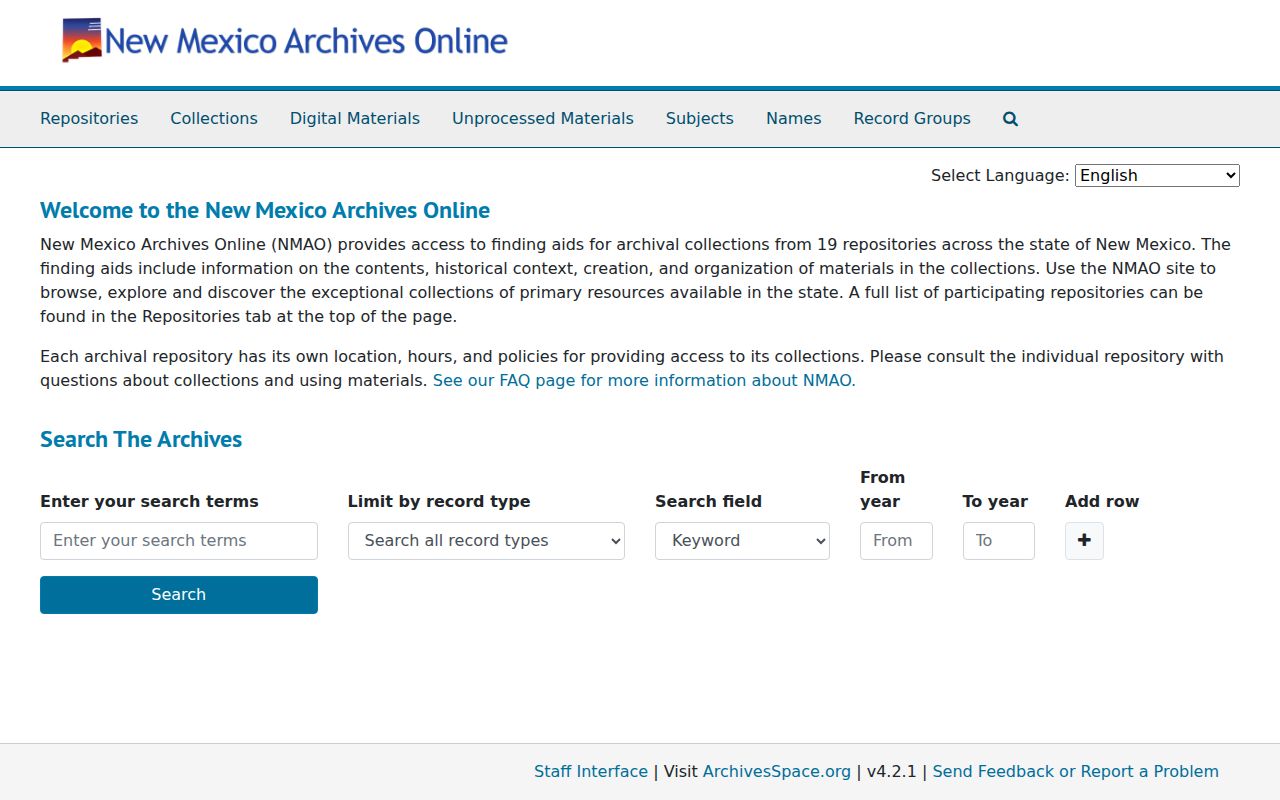
Search Farmington, San Juan County, Animas, La Plata, irrigation, plat, subdivision, oil and gas, school, and the legal description. A catalog hit needs item-level review and its own access conditions before it becomes evidence.
Farmington Previous Residents Place Terms
The numerical history context supplies historically grounded search terms without attaching a regional story to a single property. The City history describes an early-twentieth-century orchard era of more than 2,000 acres and 53,000 trees, with roughly 100 railroad cars in a harvest context. Those figures are city-history context only. They can help frame searches for agricultural, irrigation, river, or land-use references in a repository or newspaper.
Chronicling America's record for the San Juan County Index identifies a run in Aztec from 1890 through summer 1912 and notes the 1893 move of the Junction City Times to Farmington, where it became the San Juan Times. A newspaper item may supply a dated lead, but spelling, attribution, and transcription limits mean it cannot settle title, household composition, or ongoing residence.
Farmington Previous Residents Limits
No official Farmington house-history portal, historic-address survey database, online deed-image index, citywide prior-owner index, or library-published directory run was verified. The honest result is a sequence of records with stated gaps. Keep the record identifier, source URL, access date, date range, and exact field label. If a source does not expose a date or image, state that limit rather than filling it with a guess.
Lawful use. Use Farmington address history for family history, estate questions, property context, and personal research. Do not use a public-record lead to contact, follow, disclose protected details about, or harass a living person.
New Mexico Safe at Home protects actual-address information for qualifying participants. Restricted or absent information is not a gap to overcome by combining unrelated records. Respect each custodian's limits and request only the specific public record needed.
Note: A precise record request names the parcel or address, record type, dates, and the department likely to hold it.