
Finding Farmington Resident Records
Use the record that matches the question. A street address belongs first in San Juan County EagleWeb, where the county assessment account can supply a situs label, account number, parcel number, tax area, and legal summary. A deed question belongs with the County Clerk's grantor/grantee index and then the recorded document. A city permit or city map question belongs with Farmington. Court, vital, election, and professional records have separate custodians and separate limits. Farmington is in San Juan County, yet key county offices are in Aztec, so a Farmington address does not make City Hall the keeper of every record.
Keep the label attached to each result. An assessment owner field is not proof of occupancy. A recorded party is not a complete title opinion. A historic directory entry is a dated lead, not proof that a household remained there. This sequence creates a usable record trail without treating distinct government files as one master list.
- Enter the full street address in the county's structured EagleWeb situs search.
- Save the account number, parcel number, legal summary, and the date searched.
- Open the Parcel Map link and determine whether the location is inside the city or in unincorporated county territory.
- Use the County Clerk's recording route for grantor/grantee discovery, then request a copy by document number or book and page when needed.
- Ask the city, county, court, library, or archive for a specific record class and date range when no public index supplies it.
Farmington Records Custodians
These offices hold the records most often used to place a Farmington address in context. The assessor and recording offices are San Juan County functions in Aztec. The voter self-service route is for the individual voter, while wider voter-data releases have statutory restrictions. City records, including municipal permits and IPRA requests, are separate from each county function. For a full address-by-address path, the Farmington street directory keeps the property and map steps together.
San Juan County Clerk, Recording
100 S. Oliver Drive, Suite 200
Aztec, NM 87410
505-334-9471
San Juan County Assessor
100 S. Oliver Drive, Suite 400
Aztec, NM 87410
505-334-6157
New Mexico Voter Services
Statewide self-service route
Individual voter verification
Use the live state portal
Farmington Address Search Fields
The county's EagleWeb help describes a structured situs search rather than one loose address line. It separates house number, directional components, street name, designation, suffix, unit number, and City/Zip. City/Zip narrows a result, and omitting it can return all matching addresses. A parcel-number search is entered without dashes. These details make a failed search easier to diagnose and keep the exact form of the address visible.
| Farmington property field | How it is used | Important limit |
|---|---|---|
| Account number | County assessment record key | It is not a deed number. |
| Parcel number | Bridge to the Parcel Map | It does not set a legal boundary alone. |
| Situs address | Physical property context | It can differ from a mailing address. |
| Owner mailing field | Assessment administration | It does not establish occupancy. |
| Legal summary | Clerk-copy and plat research | Use the recorded document for legal proof. |
The EagleWeb public entry is the starting point for the Farmington residents directory property route.
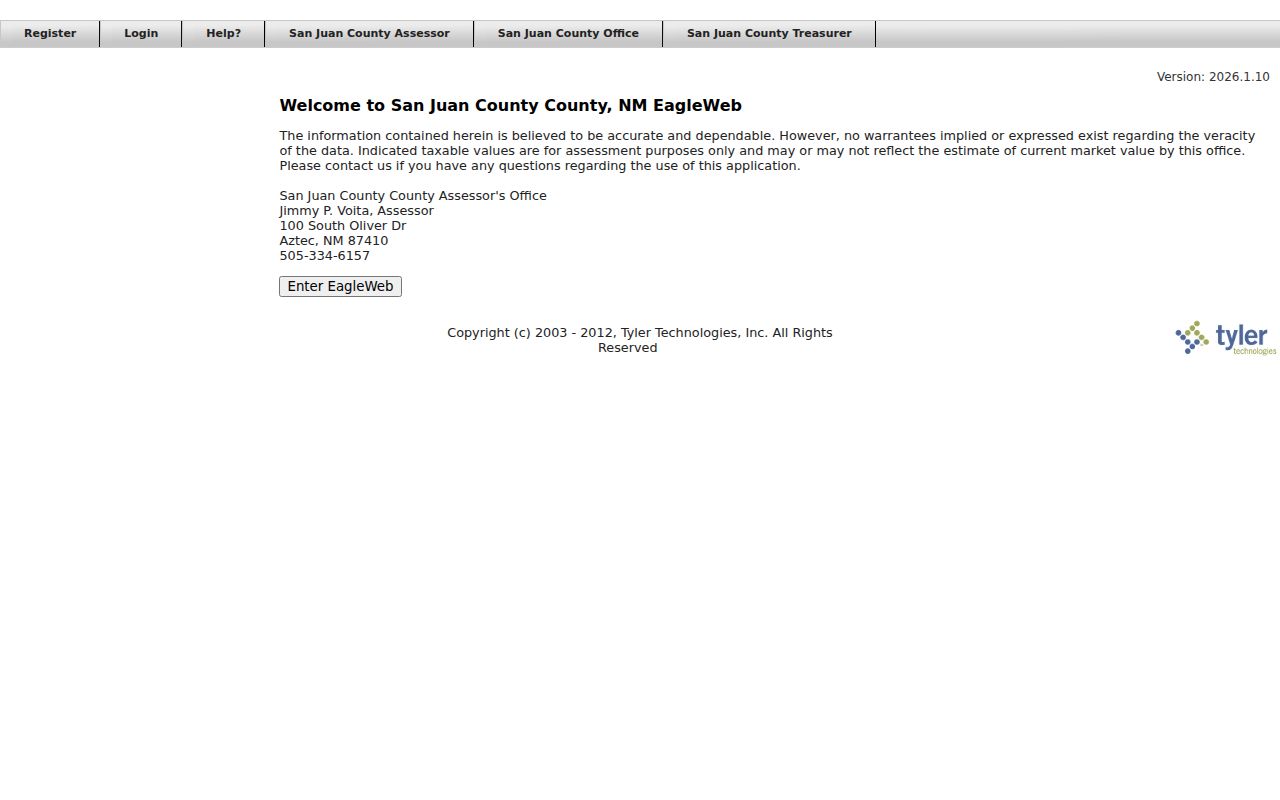
The entry screen matters because county guest access and the assessment-value disclaimer frame every later result.
The direct EagleWeb search form shows the county's account, parcel, business, situs, legal-description, and value-search routes.
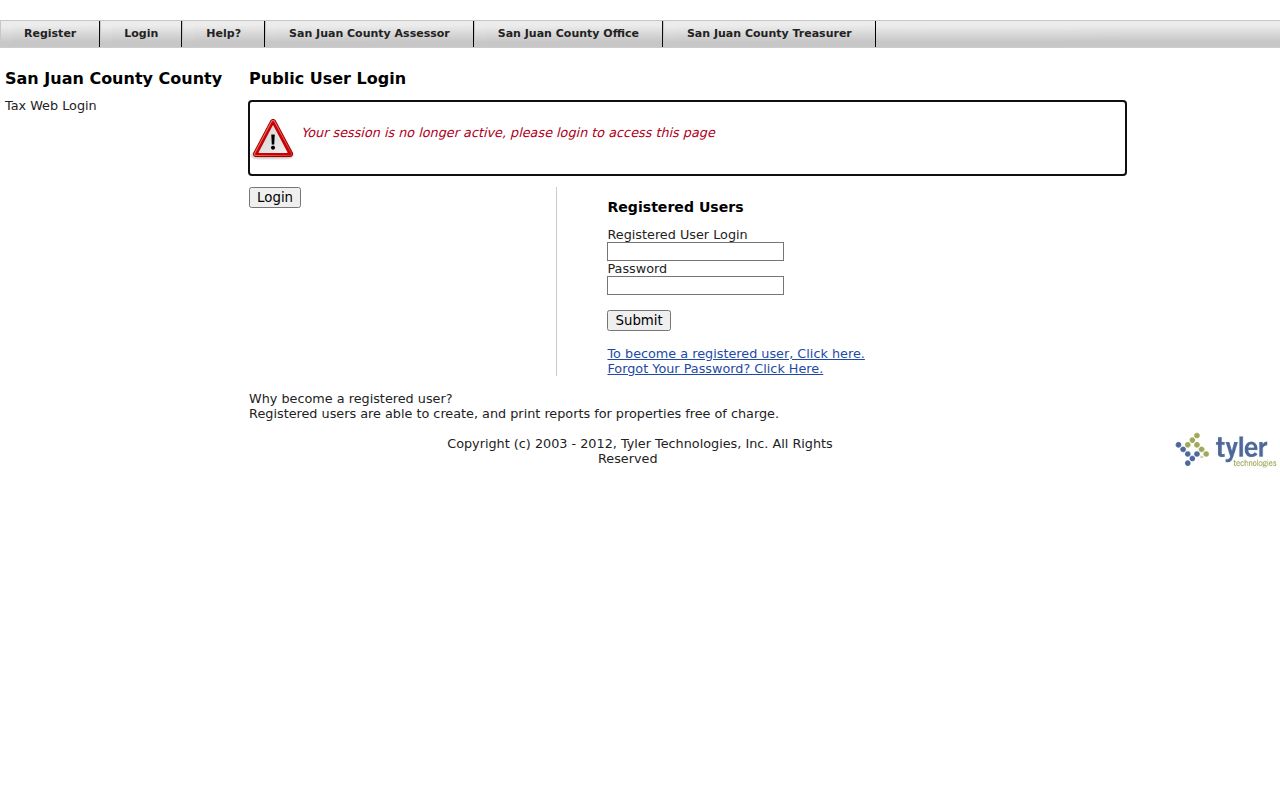
Those fields support assessment research, not a conclusion about market value, title, or who currently occupies a property.
Farmington City or County?
A Farmington mailing line is not enough to choose the custodian. City departments keep municipal permits, maps, police-record routes, and City Clerk IPRA requests. San Juan County maintains assessment, recording, elections, county permitting, and rural-addressing functions. Rural Addressing covers unincorporated county territory, excludes the Navajo Nation reservation, and requires municipal verification for a non-county address. It maps roads, structures, driveways, towers, and landmarks, but that role does not make every Farmington-address question a county rural-address question.
Use the parcel and city map context before requesting a permit or address file. The county SmartGov portal serves county permitting, while Farmington Building Inspection handles city construction permits. A map is useful administrative evidence, but the City warns that its maps are not surveys or proof of a title or boundary. For a precise boundary question, the recorded plat or survey is the stronger next record.
Note: The county seat is Aztec, so the office closest to a Farmington address may still be a county office outside city limits.
Farmington Permit Record Routes
Farmington requires construction permits for building, plumbing, mechanical, and electrical work inside city limits. The city says permits are not issued online and online payment is not accepted. Building Inspection is in the Annex at 805 Municipal Drive. Its monthly Building Permit Reports begin in January 2021 and include current 2026 material. A monthly report can point to a period or project, but the permit, plans, inspection record, or final approval remains a separate request or office inquiry.
The City permit requirements provide the local distinction between a permit lead and the underlying file.
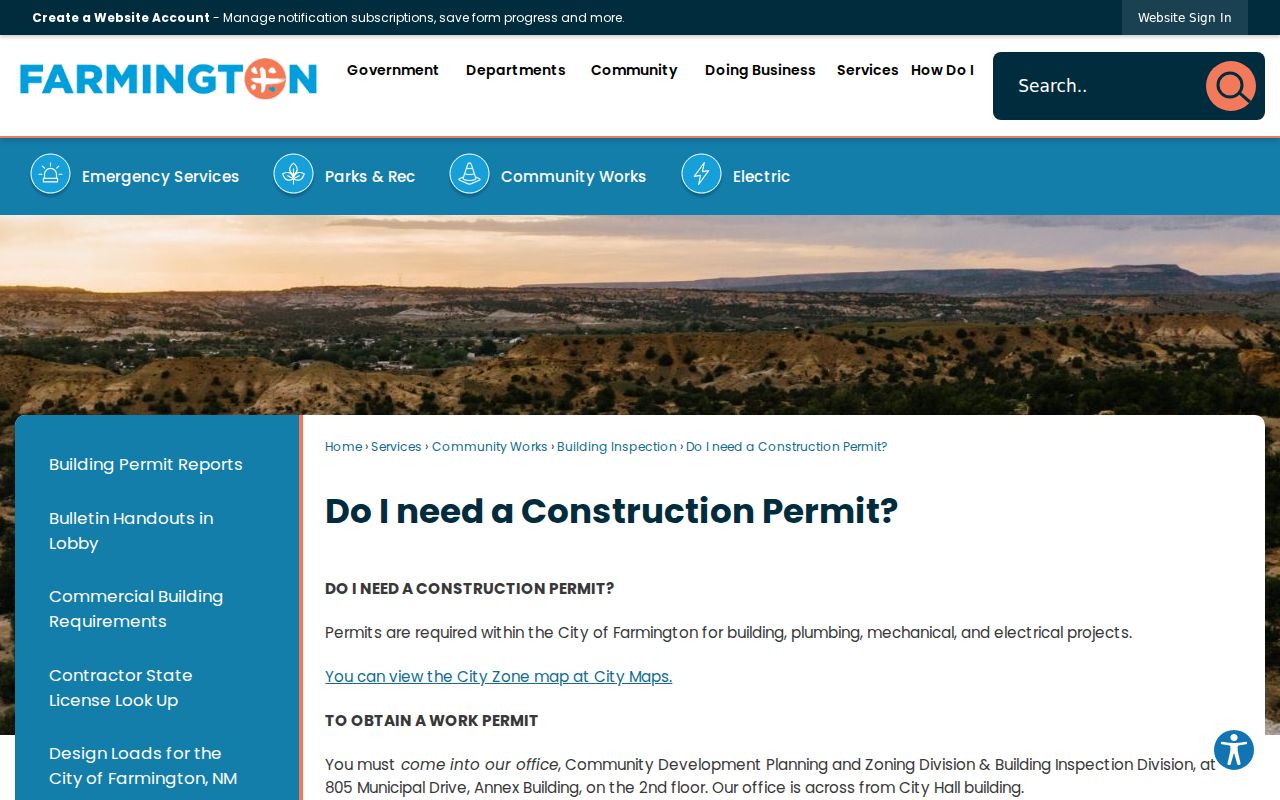
It confirms that a city construction question often needs an in-person or records-request follow-up.
The Building Permit Reports archive is the city-maintained monthly discovery route.
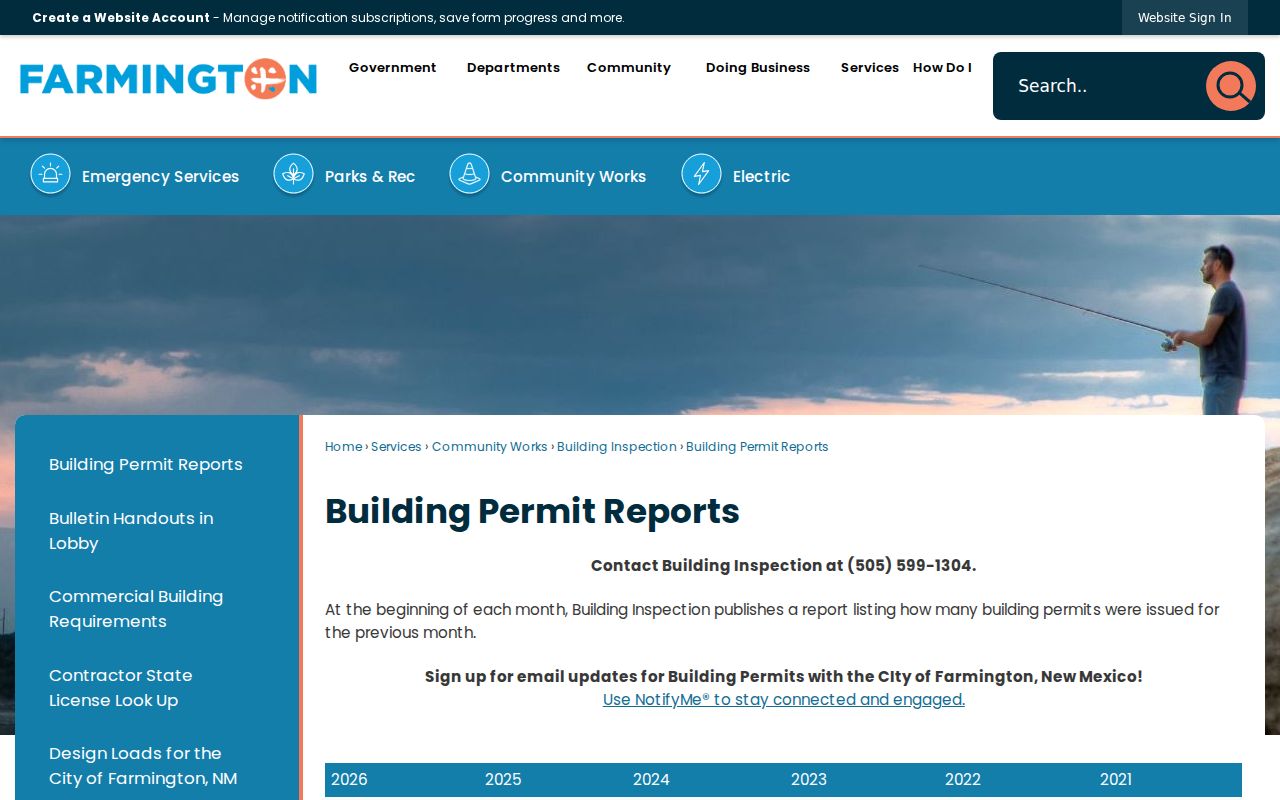
Pair a report month with an address, department, and date range when asking for a specific Farmington record.
Current Farmington Directory Sources
No official source found for this project is a complete, current roster of Farmington households. The useful sources are directory-like only in their own defined ways. An assessment account describes a parcel for county administration. The Clerk index identifies parties to recorded instruments. The city staff directory identifies public offices, not residents. Voter self-service is for the voter, and county voter-data requests are limited to stated election and government purposes. Read each source by its own labels and access rules.
| Farmington source | What it can confirm | Custodian | Access route |
|---|---|---|---|
| EagleWeb assessment account | Parcel, situs, assessment labels | County Assessor | Public guest portal |
| Recording index | Grantor/grantee instrument trail | County Clerk | Official index and copy request |
| City staff directory | Department contacts and offices | City of Farmington | Public directory |
| NMVote self-service | A voter’s own service information | New Mexico | Individual portal |
| Permit reports | Monthly municipal permit leads | City Building Inspection | Public report archive |
When the goal is one carefully bounded name-to-record check rather than an address trail, keep court, vital, property, and privacy rules separate in the Farmington resident lookup workflow.
Farmington Court Record Paths
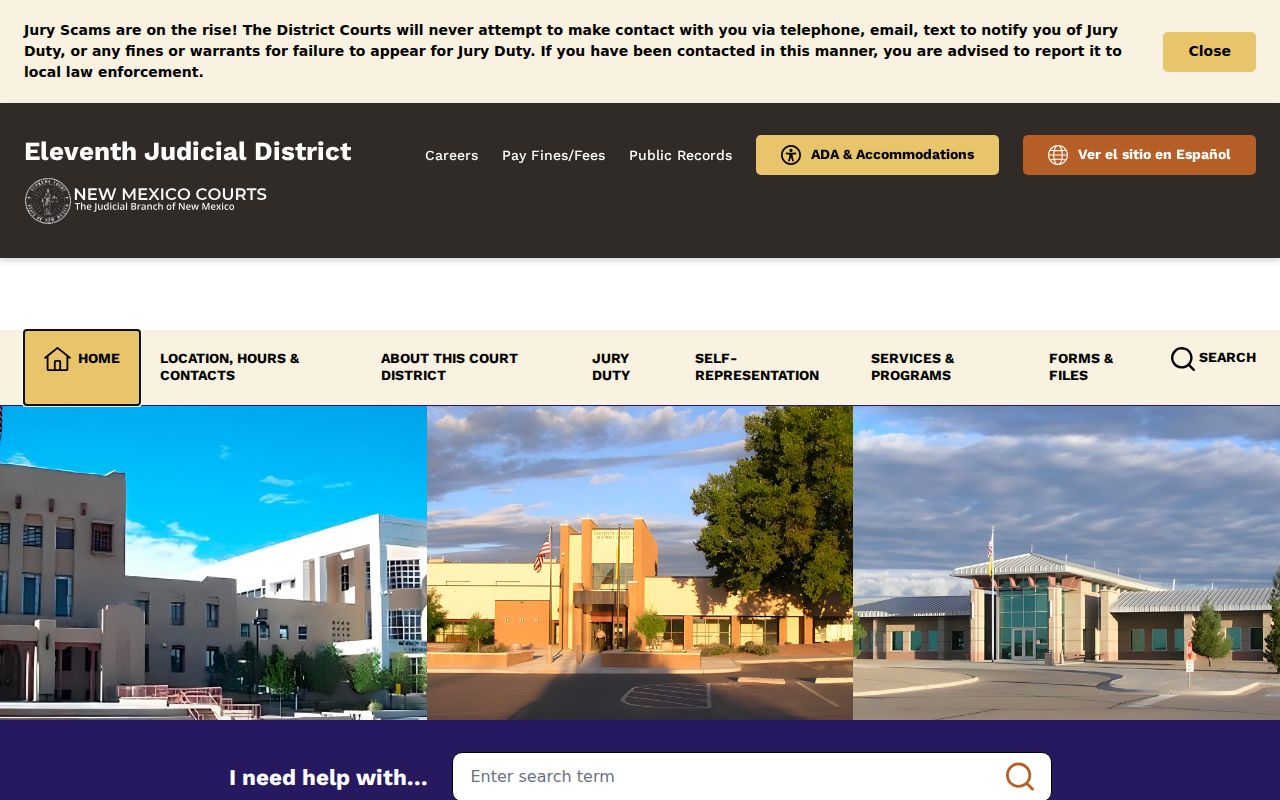
New Mexico Case Lookup is a free, no-registration route for case information from appellate, district, magistrate, metropolitan, and municipal courts, but the judiciary says it does not provide document images. A result may help identify a court, case number, caption, event summary, or status in a normal session. It is not the underlying filing, order, exhibit, or certified disposition. The Eleventh Judicial District serves San Juan County, with Farmington District Court at 851 Andrea Drive and Farmington Magistrate Court at 950 West Apache Street.
The Eleventh Judicial District court page supplies the local court contact path.
For a record not available through ordinary access, the judiciary’s IPRA form requires a responsible court or department and a focused record description.
Do not read an empty result as a final answer. The judiciary identifies time, case-category, juvenile, protection-order, address, and document-image limits. Court names and case numbers are more reliable request keys than a street address alone.
Farmington Privacy Boundaries
New Mexico records law opens many administrative pathways, but it does not erase protected information. New Mexico Safe at Home uses a substitute address for qualifying survivors. The state voter-data page describes those protections, and the voter self-service portal is not a public street-by-street browser. Birth records become public after 100 years and death records after 50 years. Before those thresholds, the Department of Health limits certified copies to specified relatives or people with a documented tangible legal interest.
Case Lookup omits document images, Social Security numbers, and addresses. An assessor field, map label, court record, voter source, and vital record cannot be combined into a personal dossier. The source's limits are part of the record, not an obstacle to work around.
Farmington Postal Geography
Postal labels are useful, but they do not settle jurisdiction. The USPS DMM labeling source groups 87401, 87402, and 87499 under Farmington, New Mexico. Census geography also associates Farmington city context with ZCTAs 87401, 87402, 87410, and 87415. A ZIP Code Tabulation Area is a Census approximation of postal geography, not a USPS delivery boundary. Use the live USPS lookup for a specific mailing address, EagleWeb for county parcel context, and city or county mapping to check government jurisdiction.
City limits, tax area, legal description, physical rural address, mailing locality, and ZIP are different fields. This distinction is especially important where an address is near unincorporated county territory or another jurisdiction. Retain the label shown by the agency instead of replacing it with a convenient postal description.
Farmington Historical Directory Leads
Farmington Public Library is the local catalog door for older directory and place research. Its catalog does not publish a verified city-directory run, reverse-directory shelf, obituary index, or local-history-room inventory. WorldCat does show a title for Polk’s Farmington (San Juan County, New Mexico) city directory and identifies R. L. Polk as publisher, but the research did not confirm issue years, holdings, or the arrangement of any volume. Ask the library for a title, year range, geographic scope, and whether a volume is alphabetical or street arranged.
The City history page puts this research in a local timeline that begins with settlement in the mid-1870s and incorporation in 1901.
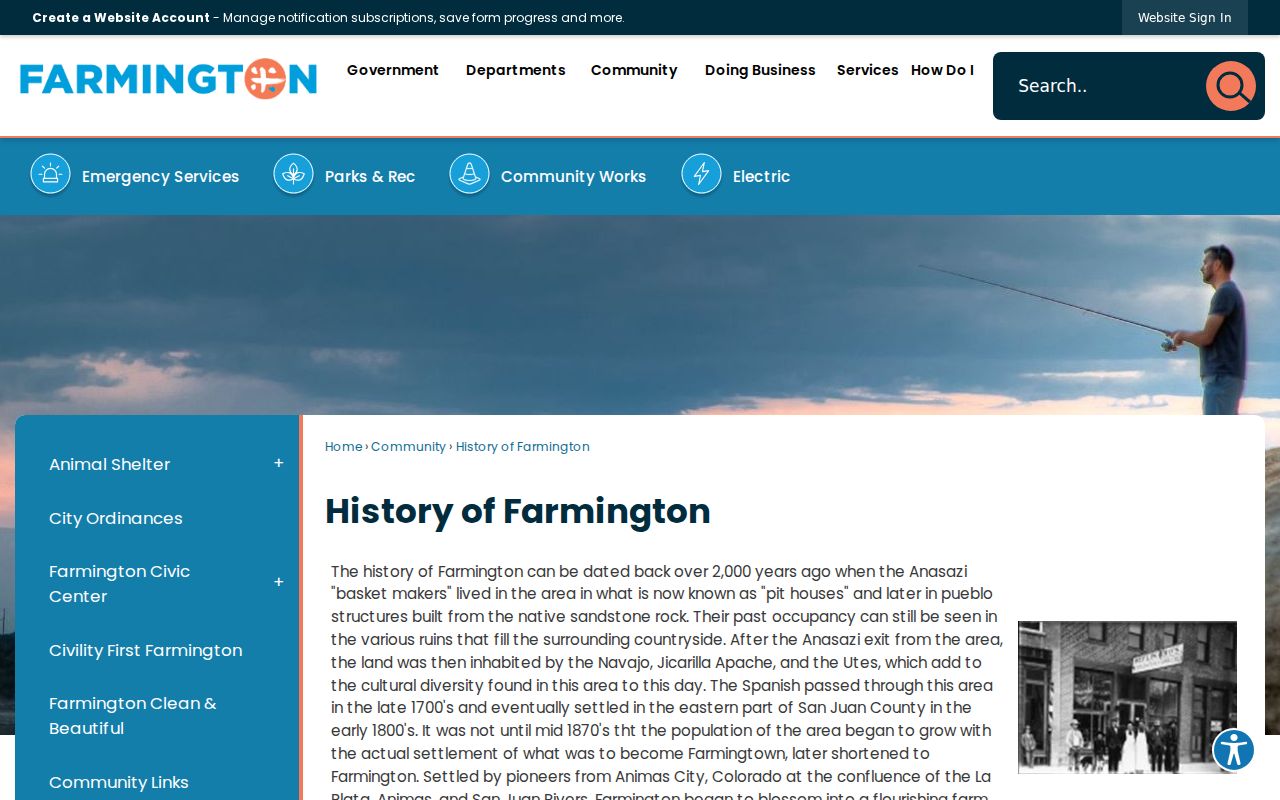
That context supports date-aware searches, not a conclusion that a specific modern address existed in an earlier era. The deeper collection and reading method appears on the Farmington city directory page.
Farmington Maps and Memory
Farmington’s documented records geography is unusually useful for place research. The City history places the community near the La Plata, Animas, and San Juan rivers, which can be productive archival terms for irrigation, ditch, bridge, flood, agricultural, and land-use questions. The 2019 historic-resources plan also describes the 1879 Pierce plat around East Main Street and explains that some cross streets still jog around early property patterns. A simple numerical assumption about the next address can fail there.
The Library of Congress holds a Farmington Sanborn fire-insurance map dated November 1908. It is one sheet, not a citywide current map or a modern boundary source. Compare the dated sheet, the current parcel map, a recorded plat, and an agency record without collapsing them into a single claim. The city’s early orchard era, described as more than 2,000 acres and 53,000 trees, is local history that can sharpen an archive search by date and subject.
Note: A historic map or newspaper can establish a dated observation, but it does not by itself establish title, present boundaries, or a current connection.
Farmington Record Labels
Clear labels prevent a useful Farmington source from being overstated. The public property route is especially rich in administrative vocabulary, while historical and court sources have their own terms. Save the source URL, record identifier, access date, and exact label whenever a result matters.
- Parcel
- A county-defined piece of property used for assessment and map context.
- Situs address
- The property location shown on an assessment account, which can differ from a mailing address.
- Grantor / grantee index
- A recording index organized around parties to an instrument, not a complete title opinion.
- Criss-cross directory
- A street-arranged historical directory format, if a repository confirms it holds one.
- Certified copy
- A custodian-issued copy bearing the certification requested for the particular record.
Assessment value is an assessment figure, not market value. Likewise, an index points to a document; it is not the same as seeing the document itself. These distinctions make a family-history, estate, or public-records question easier to verify later.
Farmington IPRA Requests
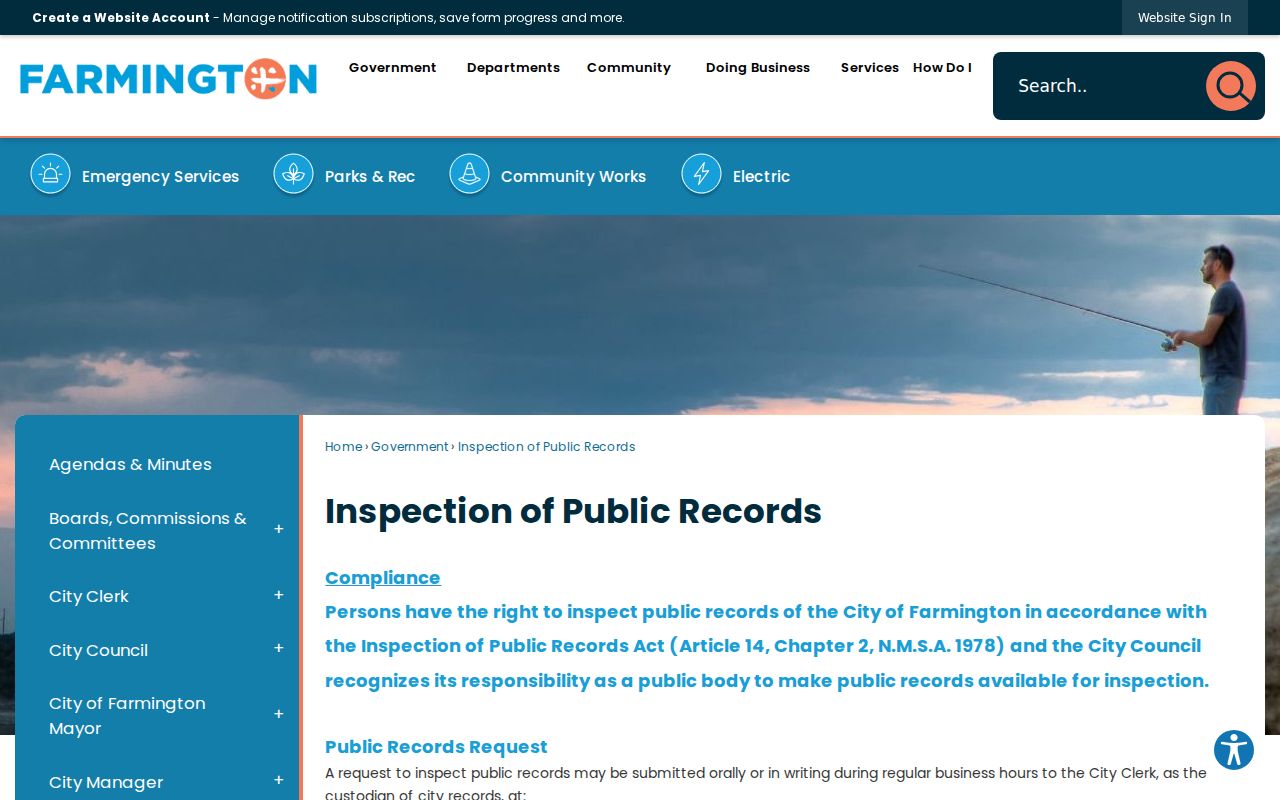
When a needed city record is not posted online, Farmington’s Inspection of Public Records page identifies the City Clerk as the request route. A written request should state the requester’s name, address, telephone number, and the records sought with reasonable specificity. The practical request is narrow: give the property address or parcel number, department, record class, and date window. The City Clerk can direct the request, but the operational department may hold the file. County and court records should go to their own custodians rather than through a generic city request.
The Farmington IPRA route provides the city custodian information and the published copy and media charges.
Specific identifiers give a custodian a workable starting point and make it easier to separate a request for a public record from a request for personal information.
Farmington publishes a copy charge of $0.50 per page for pages no larger than 11 by 17 inches and a $10 charge for a 64 GB USB drive when applicable. Those published charges do not guarantee release, electronic delivery in a preferred format, or a result from a broad request. A custodian can identify a search burden and invite a requester to narrow the scope. For address-related records, preserve the account or parcel number, department, record type, report number when known, and date range. That preparation is more useful than asking generally for every record connected to a place.